

6 Powerful Kalimas of Islam
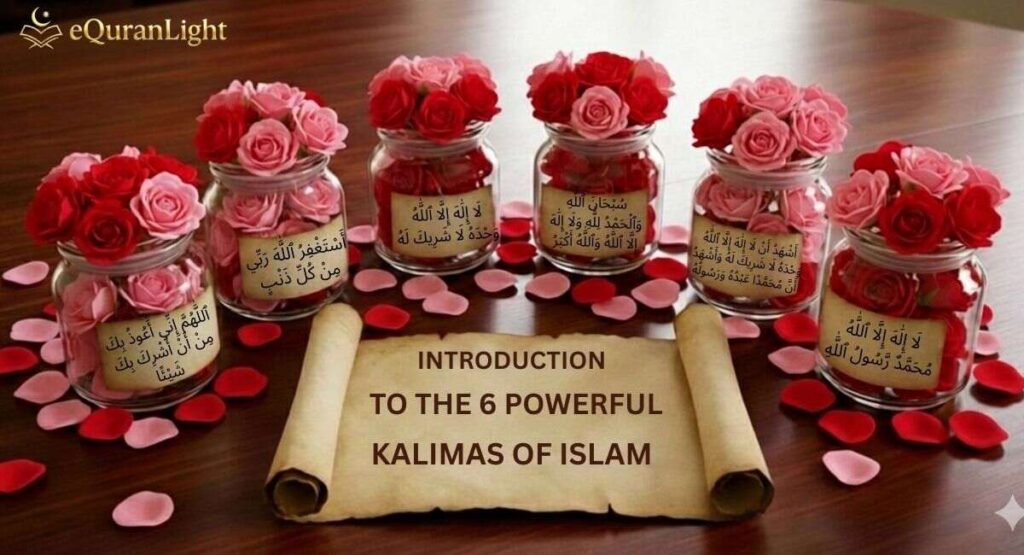
6 Powerful Kalimas of Islam form the spiritual and ideological foundation of a Muslim’s faith, clearly expressing the beliefs that guide worship and daily life. These concise yet profound declarations summarize the essence of Islam, making them easy to learn, remember, and practice for believers of all ages. Each Kalima focuses on a core principle, including Tawheed, belief in Prophethood, glorification of ALLAH, repentance, and protection from disbelief.
Understanding the 6 Powerful Kalimas of Islam goes beyond memorization; it strengthens Imaan, shapes moral character, and nurtures spiritual growth. Through regular recitation and reflection, Muslims build a deeper connection with ALLAH, reinforcing Islamic belief and maintaining clarity, sincerity, and purpose in everyday actions.
What Are the 6 Powerful Kalimas of Islam?
The 6 Powerful Kalimas of Islam are short declarations of faith that express belief in ALLAH and His Messenger, Muhammad ﷺ. They summarize essential Islamic beliefs in clear and structured language, making them easy to learn and practice.
Muslims recite the Kalimas to:
- Affirm and renew their faith
- Strengthen Imaan (belief)
- Remember ALLAH regularly
- Protect belief from shirk (associating partners with ALLAH)
For many learners especially non Arabic speakers in the worldwide and other Western countries the Kalimas act as a gateway to understanding Islam. They help explain Islamic beliefs in a simple yet meaningful way, supporting both spiritual growth and daily practice.
Names of the 6 Powerful Kalimas with Brief Explanation
Each Kalima focuses on a specific dimension of Islamic belief. Together, they present a complete picture of faith and worship, making them ideal for beginners and children.
The Six Kalimas are:
- First Kalima Tayyibah ( Declaration of Faith )
- Second Kalima Shahadat ( Testimony of Faith )
- Third Kalima Tamjeed ( Glorification of ALLAH )
- Fourth Kalima Tauheed ( Oneness of ALLAH )
- Fifth Kalima Astaghfar ( Seeking Forgiveness )
- Sixth Kalima Radd-e-Kufr ( Rejection of Disbelief )
These Islamic Kalimas with meaning are essential for adults and equally effective as Kalimas for kids, forming the basis of Islamic education worldwide.
Understanding the 6 Powerful Kalimas in Detail
The First Kalima Tayyibah affirms the Oneness of ALLAH and the prophethood of Muhammad ﷺ. It reflects the Shahada and acts as the formal declaration of Islam.
The remaining Kalimas deepen faith through:
- Praise and remembrance (Third Kalima Tamjeed)
- Strengthening Tawheed (Fourth Kalima Tauheed)
- Repentance and humility (Fifth Kalima Astaghfar)
- Protection from shirk and disbelief (Sixth Kalima Radd-e-Kufr)
Together, these Kalimas nurture a believer’s heart, strengthen conviction, and reinforce reliance on ALLAH in every aspect of life.
6 Powerful Kalimas of Islam (Easy Version Arabic, Transliteration & Meaning)
6 Powerful Kalimas of Islam Table for Kids and Beginners
(Table with Arabic, Transliteration, English, Hindi, Roman Urdu)
| Kalima | Arabic | Easy Transliteration | English Meaning (Easy) | Hindi Meaning (Easy) | Roman Urdu Meaning |
| First Kalima Tayyibah | لَا إِلٰهَ إِلَّا اللّٰهُ مُحَمَّدٌ رَّسُولُ اللّٰهِ | La ilaha illallah Muhammadur Rasoolullah | There is only one God, ALLAH, and Muhammad ﷺ is His Messenger | अल्लाह एक है और मुहम्मद ﷺ अल्लाह के रसूल हैं | ALLAH ke siwa koi mabood nahi, Muhammad ﷺ ALLAH ke Rasool hain |
| Second Kalima Shahadat | أَشْهَدُ أَنْ لَا إِلٰهَ إِلَّا اللّٰهُ وَأَشْهَدُ أَنَّ مُحَمَّدًا رَّسُولُ اللّٰهِ | Ash hadu an la ilaha illallah wa ash hadu anna Muhammadan Rasoolullah | I say with my heart that ALLAH is One and Muhammad ﷺ is His Messenger | मैं दिल से गवाही देता हूँ कि अल्लाह एक है और मुहम्मद ﷺ उसके रसूल हैं | Main gawahi deta hoon ke ALLAH aik hai aur Muhammad ﷺ us ke Rasool hain |
| Third Kalima Tamjeed | سُبْحَانَ اللّٰهِ وَالْحَمْدُ لِلّٰهِ وَاللّٰهُ أَكْبَرُ | Subhanallah walhamdulillah wallahu akbar | ALLAH is pure, all praise is for ALLAH, ALLAH is the Greatest | अल्लाह पाक है, सारी तारीफ अल्लाह के लिए है | ALLAH paak hai, sab tareef ALLAH ke liye hai |
| Fourth Kalima Tauheed | لَا إِلٰهَ إِلَّا اللّٰهُ وَحْدَهُ | La ilaha illallah wahdahu | ALLAH is One and has no partner | अल्लाह एक है, उसका कोई साझी नहीं | ALLAH aik hai, us ka koi shareek nahi |
| Fifth Kalima Astaghfar | أَسْتَغْفِرُ اللّٰهَ رَبِّي | Astaghfirullah Rabbi | O ALLAH, please forgive me | ऐ अल्लाह, मुझे माफ कर दे | Ae ALLAH, mujhe maaf farma |
| Sixth Kalima Radd-e-Kufr | اللّٰهُمَّ إِنِّي أَعُوذُ بِكَ | Allahumma inni a‘udhu bika | O ALLAH, protect me from wrong beliefs | ऐ अल्लाह, मुझे गलत विश्वास से बचा | Ae ALLAH, mujhe kufr aur shirk se bacha |
This structured format supports memorization and understanding for beginners.
Under Names of the 6 Powerful Kalimas of Islam “Complete Explanation”
First Kalma: Kalma Tayyibah (Declaration of Faith)
Arabic:
لَا إِلٰهَ إِلَّا اللّٰهُ مُحَمَّدٌ رَّسُوْلُ اللّٰهِ
Transliteration:
La ilaha illallah Muhammadur Rasoolullah
Meaning:
“There is no god but ALLAH, and Muhammad (ﷺ) is the Messenger of ALLAH.”
Significance:
This Kalma is the entry point into Islam. It affirms Tawheed (oneness of ALLAH) and belief in Prophet Muhammad (ﷺ) as the final messenger.
Second Kalma: Kalma Shahadat (Testimony of Faith)
Arabic:
أَشْهَدُ أَنْ لَا إِلٰهَ إِلَّا اللّٰهُ وَحْدَهُ لَا شَرِيْكَ لَهُ وَأَشْهَدُ أَنَّ مُحَمَّدًا عَبْدُهُ وَرَسُوْلُهُ
Meaning:
“I bear witness that there is no god except ALLAH, He is One with no partner, and I bear witness that Muhammad (ﷺ) is His servant and Messenger.”
Significance:
This Kalma strengthens belief by declaring faith with full awareness and testimony.
Third Kalma: Kalma Tamjeed (Glorification of ALLAH)
Arabic:
سُبْحَانَ اللّٰهِ وَالْحَمْدُ لِلّٰهِ وَلَا إِلٰهَ إِلَّا اللّٰهُ وَاللّٰهُ أَكْبَرُ وَلَا حَوْلَ وَلَا قُوَّةَ إِلَّا بِاللّٰهِ الْعَلِيِّ الْعَظِيمِ
Meaning:
“Glory be to ALLAH, all praise is for ALLAH, there is no god but ALLAH, ALLAH is the Greatest, and there is no power or strength except with ALLAH.”
Significance:
This Kalma teaches constant remembrance (dhikr) and reliance on ALLAH in every situation.
Fourth Kalma: Kalma Tauheed (Oneness of ALLAH)
Arabic:
لَا إِلٰهَ إِلَّا اللّٰهُ وَحْدَهُ لَا شَرِيْكَ لَهُ لَهُ الْمُلْكُ وَلَهُ الْحَمْدُ يُحْيِيْ وَيُمِيْتُ وَهُوَ حَيٌّ لَا يَمُوْتُ أَبَدًا
Meaning:
“There is no god but ALLAH alone, He has no partner. His is the dominion and praise. He gives life and causes death, and He is Ever Living.”
Significance:
This Kalma reinforces absolute Tawheed and ALLAH’s control over life and death.
Fifth Kalma: Kalma Astaghfar (Seeking Forgiveness)
Arabic:
أَسْتَغْفِرُ اللّٰهَ رَبِّيْ مِنْ كُلِّ ذَنْبٍ أَذْنَبْتُهُ عَمْدًا أَوْ خَطَأً
Meaning:
“I seek forgiveness from ALLAH, my Lord, for every sin I committed knowingly or unknowingly.”
Significance:
This Kalma teaches repentance, humility, and hope in ALLAH’s mercy.
Sixth Kalma: Kalma Radde Kufr (Rejection of Disbelief)
Arabic:
اللّٰهُمَّ إِنِّيْ أَعُوْذُ بِكَ مِنْ أَنْ أُشْرِكَ بِكَ شَيْئًا
Meaning:
“O ALLAH, I seek refuge in You from associating anything with You.”
Significance:
This Kalma protects faith by rejecting shirk, disbelief, and hypocrisy.
Importance of the 6 Powerful Kalimas of Islam
The Importance of Kalimas in Islam lies in belief and action. These words shape identity and guide choices. They remind Muslims of ALLAH’s greatness and mercy every day. For families in the worldwide, Kalimas anchor faith in a busy world. They help with renewal of faith and spiritual growth in Islam. Teaching them early supports Islamic education for children and lifelong learning.
At equranlight.com, we emphasize that the Kalimas are not merely words to memorize they are beliefs meant to be lived.
Benefits of Reciting the 6 Powerful Kalimas of Islam

There are many benefits of reciting Kalima for heart and mind. Recitation brings calm, focus, and hope. It nurtures seeking ALLAH’s mercy and trust in Him. Kalimas also encourage ethical living. They inspire honesty, humility, and patience. Over time, they support strengthening Imaan and living according to Islamic values through consistent remembrance.
Key benefits include:
- Strengthening Iman
- Protection from shirk
- Inner peace and spiritual clarity
- Regular remembrance of ALLAH
- Strong moral character for children and adults
Over time, the Kalimas nurture sincerity, patience, humility, and trust in ALLAH.
How and When to Recite the 6 Powerful Kalimas
The Kalimas can be recited at any time, especially:
- After daily prayers
- In the morning and evening
- Before sleeping
- While teaching children
- During moments of reflection or difficulty
Consistency is the key to spiritual growth.
Teaching the 6 Powerful Kalimas of Islam to Children
Children learn best when teaching is:
- Simple explanation
- Repetitive and consistent
- Encouraging and loving
- Integrated into daily routine
The Kalimas provide a strong Islamic foundation from an early age.
Origin and Background of the 6 Powerful Kalimas
Although the Six Kalimas are not listed as a single group in the Qur’an, their meanings are derived from Qur’anic verses and authentic Islamic teachings. Scholars compiled them to present core beliefs in an organized and accessible way for learners across cultures.
This method has been used for centuries and continues to benefit Muslims worldwide.
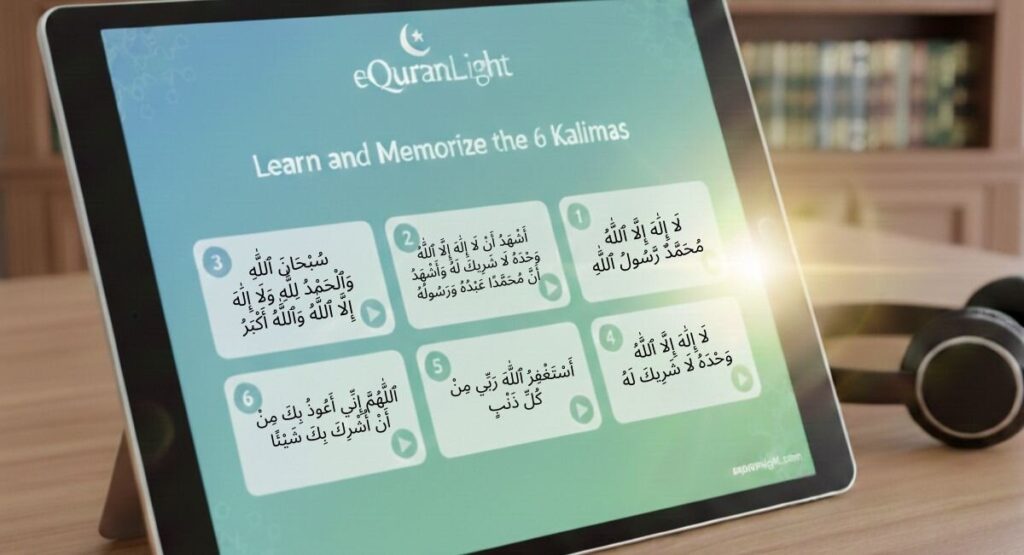
Learn and Memorize the 6 Powerful Kalimas of Islam with eQuranLight
Learning with proper guidance makes a lasting difference. equranlight.com offers structured, online learning that focuses on:
- Correct pronunciation
- Clear meaning
- Practical application
Our approach supports learners of all ages, helping families build strong Islamic foundations at home.
Conclusion
The 6 Powerful Kalimas of Islam beautifully summarize faith, worship, repentance, and belief in ALLAH’s Oneness. By understanding and living these Kalimas, Muslims strengthen their relationship with ALLAH and protect their Imaan throughout life.
At equranlight.com, our mission is to illuminate hearts through authentic Islamic knowledge. May ALLAH grant us true understanding and steadfast faith. Ameen.
FAQs
1. What are the 6 Powerful Kalimas of Islam?
The Six Kalimas of Islam are six faith statements that explain belief in ALLAH, the Prophet ﷺ, repentance, praise, and rejection of disbelief. They summarize Islamic belief in simple words.
2. Are the 6 Powerful Kalimas of Islam found in the Quran?
The exact list of six Kalimas is not mentioned as a group in the Quran. However, their meanings come from Quranic verses and authentic Islamic teachings.
3. Why are the 6 Powerful Kalimas of Islam important in Islam?
They explain the foundation of Islamic belief and help Muslims understand faith, worship, and moral responsibility in daily life.
4. Which Kalima represents the Shahada?
The First Kalima Tayyab and Second Kalima Shahadat both represent the Shahada, which is the declaration of faith in Islam.
5. Which Kalima is for forgiveness?
The Fifth Kalima Astaghfar is recited to seek forgiveness for sins and ask for ALLAH’s mercy.
6. Which Kalima protects from shirk and disbelief?
The Sixth Kalima Radd-e-Kufr protects faith by rejecting shirk, disbelief, and sinful actions.
7. Can children learn the 6 Powerful Kalimas of Islam easily?
Yes, they are commonly taught in early Islamic education because they are short, meaningful, and easy to memorize.
8. Is understanding the meaning of Kalimas necessary?
Understanding is strongly encouraged because it strengthens belief and helps Muslims practice Islam sincerely.
9. When should Muslims recite the 6 Powerful Kalimas of Islam?
They can be recited at any time, especially during daily remembrance, prayers, or moments of reflection.
10. Can non Arabic speakers learn the Kalimas in English?
Yes, learning 6 Powerful Kalimas of Islam with English translation helps non Arabic speakers understand Islamic beliefs clearly and confidently.

Our Aim
At equranlight.com, our aim is to make Quran learning easy, authentic, and accessible for everyone. We teach the Quran with proper Hifz, Tajweed, Tarjama, and Tafsir helping learners understand, recite, and memorize the Quran correctly through personalized online classes. Join us and begin your journey of learning the Quran with clarity and confidence.