

Allahumma Barik is a powerful and meaningful Islamic supplication that Muslims use to ask ALLAH to bless, increase, and protect goodness in their lives or the lives of others. This short yet profound dua reflects sincerity, humility, and a deep connection to ALLAH, reminding believers that every blessing comes directly from Him. It is commonly spoken when someone achieves success, shares good news, or displays admirable qualities. Whether it is a child’s memorization of the Quran, a new home, a helpful friend, or a small act of kindness, this phrase transforms simple admiration into a heartfelt prayer.
Despite its frequent use in homes, masajid, and social gatherings, many people say this dua without fully understanding its spiritual meaning, significance in the Sunnah, or role in daily life. When spoken consciously, it not only conveys appreciation but also invokes barakah, protects against envy and the evil eye, and nurtures positive intentions in relationships. Teaching this dua to children encourages gratitude, humility, and proper Islamic manners, ensuring that its blessings are passed down through generations.
In this comprehensive guide by equranlight.com, we will explore the authentic meaning of Allahumma Barik, its proper usage, its roots in the Sunnah, and why it holds a vital place in the everyday life of Muslims.
What Does “Allahummah Barik” Mean in Islam?
“Allahumma Barik” is an Arabic supplication (dua) made directly to ALLAH.
Word by Word Meaning
- “Allahumma” means “O ALLAH.”
- Barik means “bless,” “grant barakah,” or “increase goodness”
Together, the phrase means
“O ALLAH, bless it.”
or
“O ALLAH, place Your blessings in it.”
This dua is said when something good is seen, heard, or admired. By saying it, a Muslim asks ALLAH to increase goodness, protect the blessing, and allow it to remain beneficial.
Arabic Text, Transliteration & Pronunciation
Understanding the original form of this dua strengthens its spiritual connection.
Arabic Text
اللَّهُمَّ بَارِكْ
Transliteration
Allahumma Bārik
The pronunciation is soft and easy, making it suitable for daily use by both adults and children.
Extended Forms Based on Grammar
- Allahumma Barik Lahu “for one man”
- Allahumma Barik Laha “for one woman”
- Allahumma Barik Lahum “for a group”
All variations carry the same intention: asking ALLAH to bless.
The Concept of Barakah in Islam
The heart of this supplication lies in the concept of barakah. In Islam, barakah is not simply “more,” but divine goodness that grows, lasts, and brings benefit.
What Barakah Truly Means
Barakah can exist in:
- Wealth
- Time
- Knowledge
- Family
- Health
Something small with barakah can bring more peace than something large without it. A limited income with barakah may provide comfort, while great wealth without it may bring stress. Likewise, a few minutes with barakah can be more productive than long hours without benefit.
When a Muslim says this dua, they are asking ALLAH to place this divine quality of barakah into what they admire.
When Do Muslims Say “ALLAHUMMA BARiK”?
“Allahumma Barik” fits naturally into many moments of daily life. Islam encourages believers to express admiration with dua, not just praise.
Common Situations
Muslims often say this phrase:
- When someone shares good news or success
- When a child recites the Quran beautifully
- When admiring good character or manners
- When seeing a new home, car, or business
- When appreciating effort, skills, or creativity
Instead of stopping at compliments, Islam teaches us to add supplication, turning ordinary moments into acts of worship.
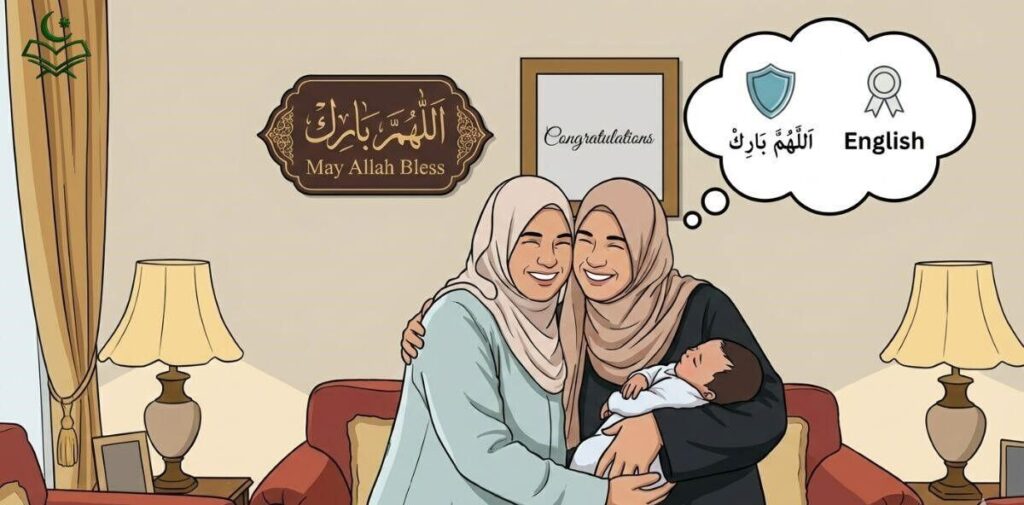
Why Muslims Say Allahummah Barik Instead of Just “Congratulations”
In many cultures, congratulations focus entirely on the person. Islam, however, teaches believers to connect every blessing back to ALLAH.
Islamic Wisdom Behind This Practice
By saying this supplication, a Muslim:
- Acknowledges ALLAH as the true giver
- Asks for protection from harm and envy
- Prays for continued goodness
The Prophet Muhammad ﷺ clearly taught this practice.
Hadith Evidence
The Prophet ﷺ said:
“If one of you sees something in his brother that he admires, let him pray for blessing (barakah) for him.”
Narrated by Imam Malik, Imam Ahmad, and Ibn Majah
This Hadith shows that making dua when admiring others is a Prophetic teaching, not merely a cultural habit.
Is Saying Allahummah Barik a Sunnah?
Although the exact wording may vary, the practice of making dua for blessings is firmly rooted in Sunnah.
Scholarly Explanation
Islamic scholars explain that this habit:
- Prevents jealousy and arrogance
- Protects from the evil eye
- Strengthens love and brotherhood
- Purifies the heart and intentions
For this reason, using this phrase reflects excellent Islamic etiquette (adab) and a strong connection to Prophetic guidance.
Protection From the Evil Eye (Nazar)

The evil eye is a reality acknowledged in Islam. Sometimes, even sincere admiration can unintentionally cause harm if it is not accompanied by dua.
How This Dua Protects
This short supplication acts as a spiritual shield,
- The admirer protects their own heart from envy
- The person admired is protected from harm
- Relationships remain peaceful and sincere
Instead of admiration turning into jealousy, it becomes a prayer. A small dua but with a powerful spiritual impact.
Allahummah Barik vs MashAllah “Understanding the Difference“
Many people confuse these two beautiful phrases.
MashAllah
- Acknowledges that something happens by ALLAH’s will
- Expresses amazement and recognition
Allahummah Barik
- Asks ALLAH to bless and protect
- Seeks continuation of goodness
Best Practice
Many Muslims say both together,
“MashAllah, Allahummah Barik.”
Meaning,
“What ALLAH has willed, may ALLAH bless it.”
This combination acknowledges ALLAH and asks for barakah at the same time.
Using This Phrase in Everyday Muslim Life
This expression blends naturally into daily interactions, making it easy to practice regularly.
Everyday Examples
- Complimenting someone’s handwriting or creativity
- Appreciating a delicious meal
- Praising a child’s memorization of the Quran
- Admiring someone’s calm behavior
- Seeing confidence or happiness in another person
Using this dua regularly helps develop gratitude, humility, and kindness in everyday speech.
Teaching Children to Say Allahummah Barik
Children learn Islamic manners best through example. When parents and teachers use this phrase consistently, children naturally adopt it.
Benefits for Children
Teaching this supplication helps children:
- Appreciate others positively
- Avoid jealousy
- Speak with kindness
- Connect blessings to ALLAH
- Develop humility
These small habits shape a child’s character and remain with them throughout life.
Common Mistakes People Make
Despite good intentions, some mistakes are common.
Frequent Errors
- Using the phrase only for big achievements
- Confusing it entirely with MashAllah
- Saying it without understanding its meaning
In Islam, even small blessings deserve protection and gratitude. Understanding the purpose of this dua helps Muslims use it correctly and sincerely.
Spiritual and Social Benefits of This Dua
This short supplication has long term benefits beyond the moment it is spoken.
Key Benefits
- Strengthens faith in ALLAH
- Cleanses the heart from envy
- Protects relationships
- Encourages positive speech
- Turns admiration into worship
It builds a society rooted in dua, sincerity, and mutual care.
Final Thoughts
Allahummah Barik is a short phrase with a deep message. It reflects love, sincerity, humility, and strong belief in ALLAH. It protects blessings, softens hearts, and strengthens bonds between people.
By making this dua a regular part of daily speech, Muslims transform ordinary admiration into worship and gratitude. Whether spoken for a child, spouse, friend, student, or even a stranger, this phrase remains one of the most beautiful responses taught by Islam.
At equranlight.com, we strive to revive authentic Sunnah practices in a clear and practical way so that Islamic values remain alive in everyday Muslim life and continue to bring barakah to hearts and homes.
FAQs
1-What does Allahumma Barik mean in Islam?
Allahumma Barik is a short Islamic dua that means “O ALLAH, bless it.” Muslims say it when they see something good and want ALLAH to increase its blessings and protect it from harm.
2-When should Muslims say Allahumma Barik?
Muslims say Allahumma Barik when admiring success, children, wealth, knowledge, skills, or any positive blessing in someone’s life. It is a way to turn admiration into dua.
3-Is saying Allahumma Barik a Sunnah?
Yes, making dua for blessings when admiring something is supported by the Sunnah of Prophet Muhammad ﷺ. Authentic Hadith encourage praying for barakah to protect blessings and hearts.
4-What is the difference between MashAllah and Allahumma Barik?
MashAllah acknowledges that something happens by ALLAH’s will, while Allahumma Barik asks ALLAH to place blessings in it. Both are correct and often said together.
5-Does Allahumma Barik protect from the evil eye?
Yes, scholars explain that saying Allahumma Barik helps protect from the evil eye (nazar) by turning admiration into sincere supplication.
6-Can Allahumma Barik be said for oneself?
Yes, it is permissible to say Allahumma Barik for your own blessings, achievements, or family, while maintaining humility and gratitude to ALLAH.
7-How can parents teach children to say Allahumma Barik?
Parents can teach children by example using the phrase daily when praising others. This helps children develop gratitude, kindness, and Islamic manners from an early age.
8-Can Allahumma Barik be used in daily conversation?
Absolutely. Allahumma Barik fits naturally into daily Muslim life, whether at home, school, work, or online, making everyday speech more connected to worship.

Our Aim
At equranlight.com, our aim is to make Quran learning easy, authentic, and accessible for everyone. We teach the Quran with proper Hifz, Tajweed, Tarjama, and Tafsir helping learners understand, recite, and memorize the Quran correctly through personalized online classes. Join us and begin your journey of learning the Quran with clarity and confidence.