

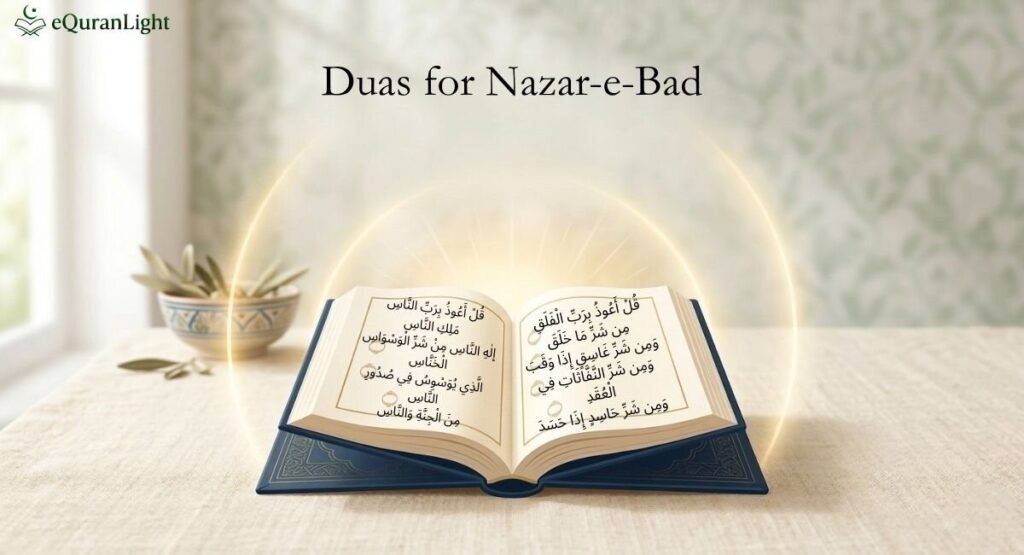
Human life is filled with blessings, achievements, and moments that naturally attract the attention of others. While admiration is usually harmless, Islam teaches that envy or excessive praise can sometimes lead to harm known as the evil eye.
For this reason, Muslims are encouraged to seek protection through Nazar e Bad Ki Dua, a powerful supplication rooted in authentic Islamic teachings. The reality of the evil eye in Islam is clearly confirmed through the Quran and the sayings of Prophet Muhammad ﷺ, reminding believers that no harm can occur except by the will of ALLAH.
Islam therefore encourages believers to strengthen their faith through Quranic protection from evil eye, regular remembrance of ALLAH, and recitation of authentic Islamic duas taught in the Sunnah. These practices provide spiritual strength and help believers seek buri nazar protection in their daily lives. At equranlight.com, this guide explains the authentic Nazar e Bad Ki Dua along with Quranic verses, hadith references, and Sunnah methods to protect yourself and your family from harm.
What Is Nazar e Bad? Islamic Understanding of the Evil Eye
The term Nazar e Bad refers to harm that may occur when a person looks at someone or something with envy, jealousy, or even strong admiration. According to Islamic belief, the evil eye does not act independently. Rather, it can only affect someone if ALLAH allows it as part of His divine decree.
Islam recognizes that envy is a harmful trait that can damage relationships and disturb spiritual balance. Because of this, the Quran encourages believers to seek protection from the harm of those who envy others.
Muslims are taught that blessings should always be attributed to ALLAH, and when admiring someone or something, one should say “MashaAllah” to acknowledge that all blessings come from Him.
This mindset promotes humility, gratitude, and protection from negative feelings such as jealousy and envy.
Authentic Hadith About the Reality of the Evil Eye
The reality of the evil eye is clearly mentioned in the teachings of Prophet Muhammad ﷺ. One of the most well-known hadith regarding the evil eye states:
الْعَيْنُ حَقٌّ وَلَوْ كَانَ شَىْءٌ سَابَقَ الْقَدَرَ سَبَقَتْهُ الْعَيْنُ وَإِذَا اسْتُغْسِلْتُمْ فَاغْسِلُوا
Translation
“The evil eye is real. If anything were to precede destiny, it would be the evil eye. When you are asked to wash (to cure someone affected), then wash.”
Reference:– Sahih Muslim (Hadith 2188)
This hadith highlights two important Islamic principles.
First, the Prophet ﷺ clearly affirmed that the evil eye is a real phenomenon. Second, he explained that if the person responsible for the evil eye is known, they may be asked to perform ablution (wudu) and the water may be used to treat the affected person.
However, Islam also emphasizes that the evil eye does not override destiny. Everything happens only by ALLAH’s decree, and believers must place their trust in Him.
Powerful Nazar e Bad Ki Dua from Sunnah
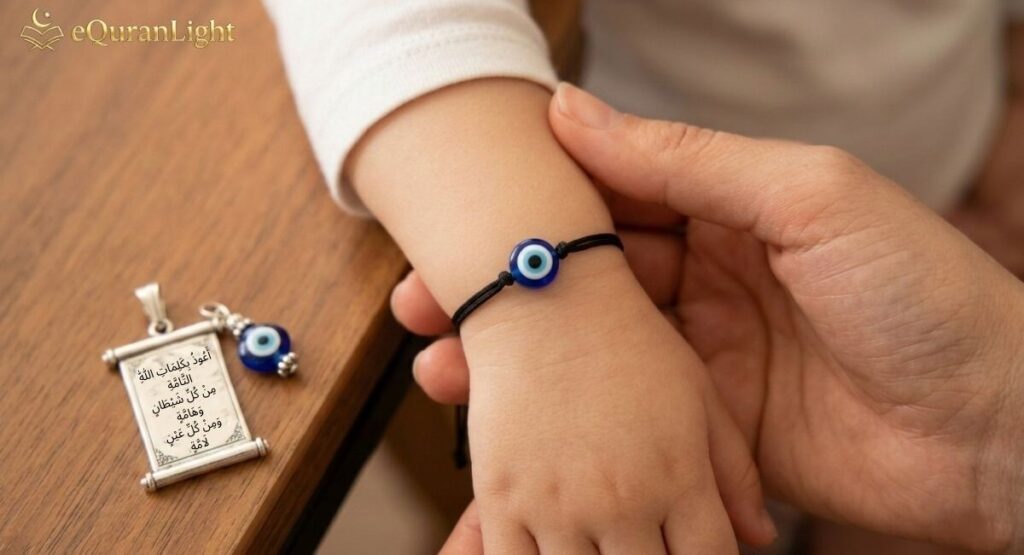
The Nazar e Bad Ki Dua taught by Prophet Muhammad ﷺ is one of the most authentic supplications for protection from the evil eye.
Islam provides powerful supplications that believers can recite for protection from harm, including the evil eye.
One of the most famous duas taught by the Prophet ﷺ is:
أَعُوذُ بِكَلِمَاتِ اللّٰهِ التَّامَّةِ مِنْ كُلِّ شَيْطَانٍ وَهَامَّةٍ وَمِنْ كُلِّ عَيْنٍ لَامَّةٍ
Meaning
“I seek refuge in the perfect words of ALLAH from every devil, from every harmful creature, and from every evil eye.”
Reference:– Sahih al-Bukhari (Hadith 3371)
The Prophet ﷺ used to recite this dua for his grandsons Hasan and Husayn (RA). This practice demonstrates the importance of seeking ALLAH’s protection for family members, especially children.
Reciting this supplication regularly is a simple but powerful Sunnah practice that strengthens a believer’s trust in ALLAH’s protection.
Quranic Protection from the Evil Eye (Surah Al-Falaq and Surah An-Nas)
The Quran itself provides powerful chapters that believers can recite along with Nazar e Bad Ki Dua to seek protection from the evil eye.
Two of the most important chapters for protection are Surah Al-Falaq and Surah An-Nas. These chapters are often called Al-Mu’awwidhatayn, meaning “the two chapters of refuge.”
Surah Al Falaq
قُلْ أَعُوذُ بِرَبِّ الْفَلَقِ مِن شَرِّ مَا خَلَقَ وَمِن شَرِّ غَاسِقٍ إِذَا وَقَبَ
وَمِن شَرِّ النَّفَّاثَاتِ فِي الْعُقَدِ وَمِن شَرِّ حَاسِدٍ إِذَا حَسَدَ
This chapter specifically mentions protection from the harm of the envier when he envies, which is closely related to the concept of the evil eye.
Surah An Naas
قُلْ أَعُوذُ بِرَبِّ النَّاسِ مَلِكِ النَّاسِ إِلٰهِ النَّاسِ مِنْ شَرِّ الْوَسْوَاسِ الْخَنَّاسِ
الَّذِي يُوَسْوِسُ فِي صُدُورِ النَّاسِ مِنَ الْجِنَّةِ وَالنَّاسِ
This chapter focuses on seeking refuge in ALLAH from hidden whispers and unseen harm.
Reciting these chapters regularly helps believers remain under the protection of ALLAH.
Reciting Ayat ul Kursi for Protection
Another powerful Quranic verse known for its spiritual protection is Ayat ul Kursi (Surah Al-Baqarah 2:255).
The Prophet ﷺ said:
مَنْ قَرَأَ آيَةَ اَلْكُرْسِيِّ دُبُرَ كُلِّ صَلَاةٍ مَكْتُوبَةٍ لَمْ يَمْنَعْهُ مِنْ دُخُولِ اَلْجَنَّةِ إِلَّا اَلْمَوْتُ
Translation
“Whoever recites Ayat al-Kursi after every obligatory prayer, nothing prevents him from entering Paradise except death.”
Reference:– Sunan An-Nasa’i (Hadith 984) authenticated by Ibn Hibban.
Scholars mention that regular recitation of Ayat ul Kursi strengthens spiritual protection and increases blessings in daily life.
Because of this, Muslims are encouraged to recite it
- After obligatory prayers
- Before sleeping
- During morning and evening remembrance
Many scholars also recommend reciting Nazar e Bad Ki Dua along with Ayat ul Kursi for complete spiritual protection.
Sunnah Method of Protection Before Sleeping
The Prophet ﷺ also taught a beautiful nightly practice for seeking protection from harm.
It is reported that:
أَنَّ النَّبِيَّ ﷺ كَانَ إِذَا أَوَى إِلَى فِرَاشِهِ كُلَّ لَيْلَةٍ جَمَعَ كَفَّيْهِ ثُمَّ نَفَثَ فِيهِمَا فَقَرَأَ فِیْهِمَا ( قُلْ هُوَ اللَّهُ أَحَدٌ ) وَ ( قُلْ أَعُوذُ بِرَبِّ الْفَلَقِ ) وَ ( قُلْ أَعُوذُ بِرَبِّ النَّاسِ ) ثُمَّ يَمْسَحُ بِهِمَا مَا اسْتَطَاعَ مِنْ جَسَدِهِ يَبْدَأُ بِهِمَا عَلَى رَأْسِهِ وَوَجْهِهِ وَمَا أَقْبَلَ مِنْ جَسَدِهِ يَفْعَلُ ذَالِكَ ثَلاَثَ مَرَّاتٍ
Translation
“When the Prophet ﷺ went to bed at night, he would gather his palms, blow into them, recite Surah Al-Ikhlas, Surah Al-Falaq, and Surah An-Nas, then wipe his hands over his body beginning with his head and face.”
Reference:– Sahih al-Bukhari (Hadith 5017)
He repeated this action three times.
This Sunnah is a powerful spiritual protection practice that Muslims can easily follow every night.
Daily Islamic Practices to Protect Yourself from Nazar e Bad
Islam encourages believers to adopt daily habits such as reciting Nazar e Bad Ki Dua, Quranic verses, and morning and evening adhkar for protection.
Recite Morning and Evening Azkar
Morning and evening supplications protect believers throughout the day and night.
Recite Ayat ul Kursi
Ayat ul Kursi is widely known for its protective benefits.
Recite the Three Quls
Surah Al-Ikhlas, Surah Al-Falaq, and Surah An-Nas should be recited regularly for protection.
Say “MashaAllah”
When admiring someone’s blessings, saying MashaAllah reminds us that all blessings come from ALLAH and prevents envy.
Make Regular Dua
Consistent supplication strengthens a believer’s connection with ALLAH and protects them spiritually.
Protecting Children from Nazar e Bad
Children often receive admiration and attention from others, which is why Islam encourages parents to seek protection for them through dua.
Parents are also encouraged to recite Nazar e Bad Ki Dua for their children just as The Prophet ﷺ regularly prayed for his grandchildren Hasan and Husayn (RA). This shows that parents should actively seek ALLAH’s protection for their children.
Reciting the protective dua taught by the Prophet ﷺ helps create a spiritual environment in which children grow with faith and protection.
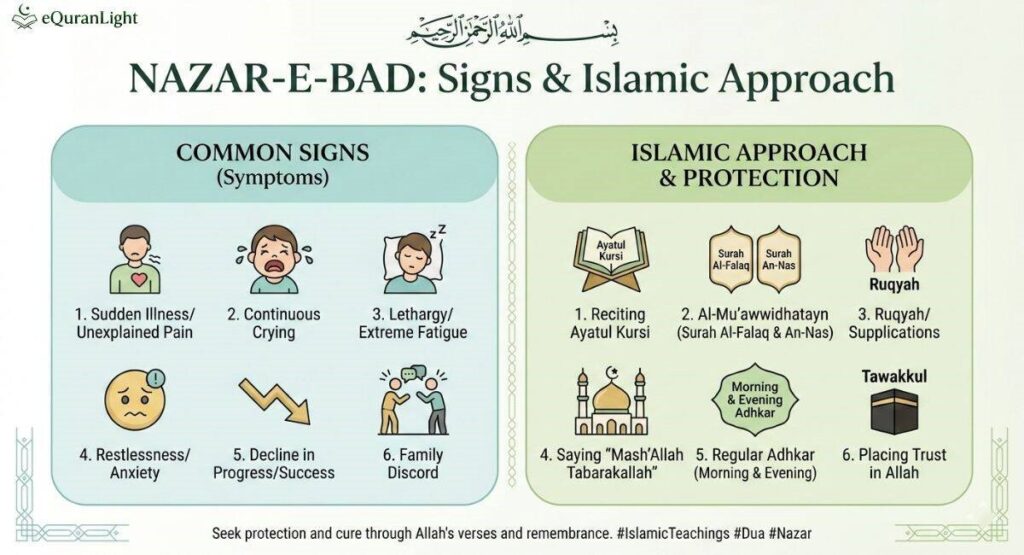
Signs of Nazar e Bad and the Islamic Approach
Islam does not encourage believers to constantly suspect the evil eye. Instead, Muslims are encouraged to respond to difficulties by increasing their remembrance of ALLAH.
If someone experiences sudden problems or illness, they should increase
- Quran recitation
- Dua
- Charity
- Remembrance of ALLAH
These actions strengthen faith and bring spiritual comfort.
The focus should always remain on trust in ALLAH rather than fear of unseen harm.
Final Thoughts
The concept of Nazar e Bad (evil eye) is acknowledged in Islam through authentic Quranic verses and prophetic teachings. However, Islam does not promote superstition or fear. Instead, it teaches believers to seek protection through dua, Quran recitation, and reliance upon ALLAH.
By following the Sunnah practices taught by the Prophet ﷺ “such as reciting Ayat ul Kursi, Surah Al-Ikhlas, Surah Al-Falaq, and Surah An-Nas, and making regular supplications Muslims can protect themselves and their families from harm.
At equranlight.com, our goal is to share authentic Islamic knowledge in a clear and practical way so that believers can strengthen their faith and spiritual protection. Ultimately, true protection belongs only to ALLAH, and turning to Him sincerely is the greatest safeguard against every form of harm.
By regularly reciting Nazar e Bad Ki Dua, Ayat ul Kursi, and the three Quls, believers can protect themselves and their families from the evil eye.
(FAQs)
1-What is Nazar e Bad in Islam?
Nazar e Bad, commonly known as the evil eye, refers to harm that may occur when someone looks at another person with envy, jealousy, or excessive admiration. Islam acknowledges that the evil eye is real, but Muslims believe that no harm can occur unless ALLAH allows it according to His divine decree.
2-Is Nazar e Bad mentioned in Hadith?
Yes, the reality of the evil eye is confirmed in authentic hadith. The Prophet Muhammad ﷺ said:
الْعَيْنُ حَقٌّ
Translation: “The evil eye is real.”
Reference: Sahih al-Bukhari (5740) and Sahih Muslim (2188).
This hadith clearly confirms that the evil eye exists, while reminding believers to rely on ALLAH for protection.
3-What is the most powerful Nazar e Bad Ki Dua in Islam?
One of the most authentic duas for protection from the evil eye is:
أَعُوذُ بِكَلِمَاتِ اللّٰهِ التَّامَّةِ
مِنْ كُلِّ شَيْطَانٍ وَهَامَّةٍ
وَمِنْ كُلِّ عَيْنٍ لَامَّةٍ
Meaning: “I seek refuge in the perfect words of ALLAH from every devil, harmful creature, and every evil eye.”
The Prophet ﷺ used to recite this dua for Hasan and Husayn (RA).
(Sahih al-Bukhari)
4-Which Surahs protect from Nazar e Bad?
Islamic scholars recommend reciting certain Quranic chapters for protection from the evil eye and envy. These include,
- Surah Al-Ikhlas
- Surah Al-Falaq
- Surah An-Nas
These chapters are known as the three Quls, and the Prophet ﷺ regularly recited them for protection.
5-Can Ayat ul Kursi protect from evil eye?
Yes, Ayat ul Kursi (Surah Al-Baqarah 2:255) is one of the most powerful Quranic verses for protection. The Prophet ﷺ said that whoever recites it after every obligatory prayer will receive great reward and protection.
Reference: Sunan An-Nasa’i (Hadith 984).
6-How can Muslims protect themselves from Nazar e Bad?
Islam teaches several simple ways to protect oneself from the evil eye:
- Recite morning and evening azkar
- Recite Ayat ul Kursi
- Recite Surah Al-Ikhlas, Al-Falaq, and An-Nas
- Make dua for protection
- Say MashaAllah when admiring blessings
These practices help believers remain under ALLAH’s protection.
7-How did the Prophet ﷺ protect himself from the evil eye?
The Prophet ﷺ used to recite Surah Al-Ikhlas, Surah Al-Falaq, and Surah An-Nas before sleeping. He would blow into his palms and wipe them over his body for protection.
Reference: Sahih al-Bukhari (Hadith 5017).
8-Should Muslims fear Nazar e Bad?
Islam does not encourage believers to live in fear of the evil eye. Instead, Muslims are taught to rely on faith, dua, and remembrance of ALLAH. Strong belief and following the guidance of the Quran and Sunnah provide the greatest protection.

Our Aim
At equranlight.com, our aim is to make Quran learning easy, authentic, and accessible for everyone. We teach the Quran with proper Hifz, Tajweed, Tarjama, and Tafsir helping learners understand, recite, and memorize the Quran correctly through personalized online classes. Join us and begin your journey of learning the Quran with clarity and confidence.